
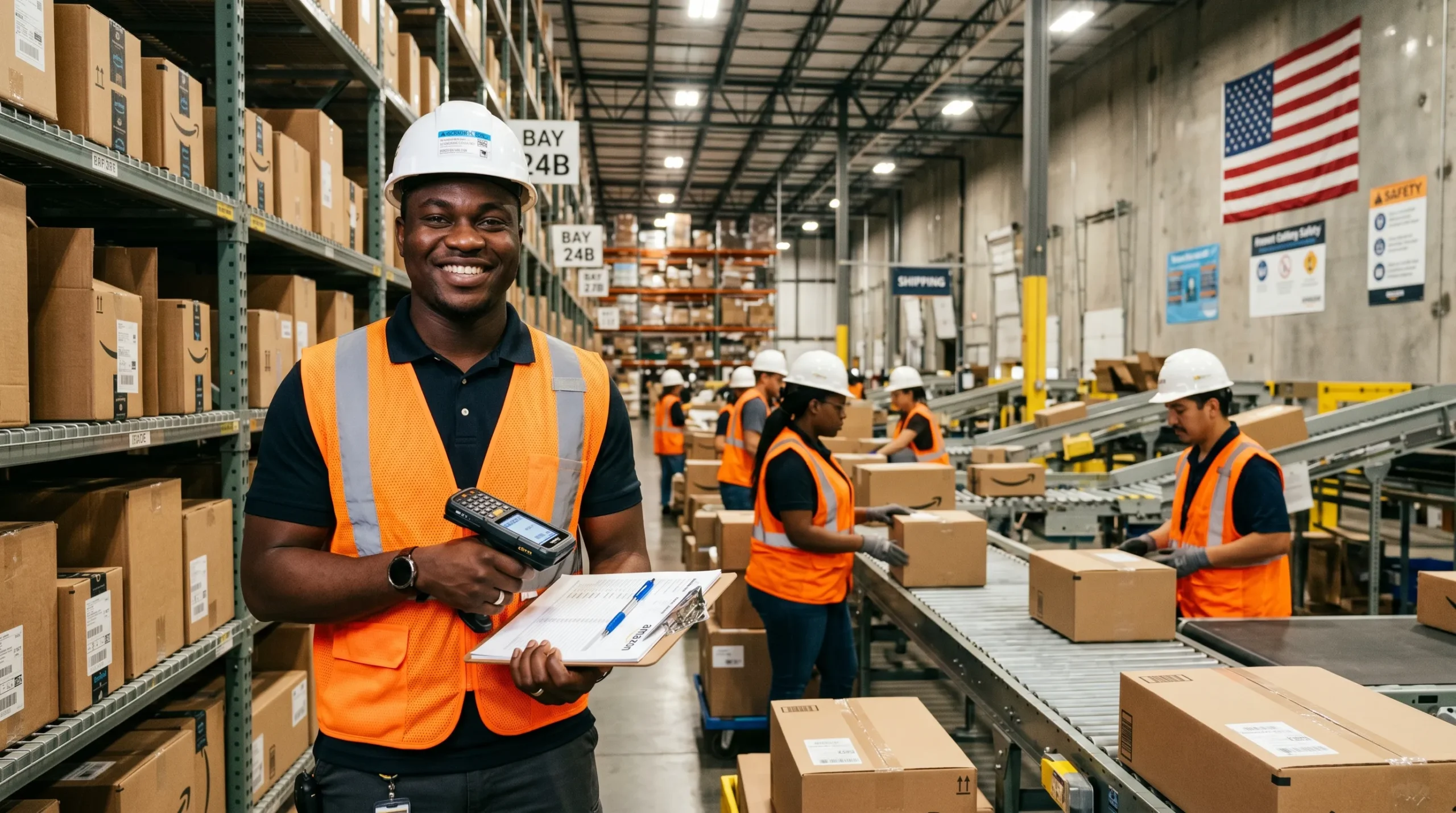
If you have ever dreamed of working in the United States, earning a steady dollar income, and building a better life for yourself and your family — this opportunity might be exactly what you have been waiting for. Right now, American logistics and warehouse companies are actively hiring foreign workers and offering full visa sponsorship as part of the deal. No, you do not need to already be in the US. You can apply from Nigeria and fly over once approved.
In this post, we break down everything you need to know about USA warehouse jobs with visa sponsorship in 2025/2026 — from salary figures and eligibility requirements to the exact application process.
Overview of the Opportunity
Warehouse and logistics jobs in the United States have exploded over the last few years, driven largely by the growth of e-commerce giants like Amazon, FedEx, UPS, and Walmart. These companies process millions of orders every single day, and they simply do not have enough local workers to fill all the open roles.
That is where international workers come in. Under certain US work visa programs — primarily the H-2B visa for temporary non-agricultural workers and employer-sponsored permanent work visas — companies can legally hire skilled and semi-skilled workers from abroad. And yes, Nigeria is on the list of eligible countries.
Annual salaries for warehouse workers in the US range from $40,000 to $65,000 depending on your role, location, and shift. Senior logistics coordinators and team leads can earn up to $80,000 per year.
Why This Opportunity Matters
Let us be honest. In Nigeria today, the cost of living is rising faster than most salaries. The naira has lost significant value against the dollar. A graduate with a BSc degree may earn ₦150,000 per month — barely enough to cover rent, food, transportation, and utilities.
Now imagine earning $4,500 to $5,500 every month in the United States, in dollars. Even after US taxes, your take-home pay could be $3,200 to $4,000 monthly. That is roughly ₦5 million to ₦6 million per month at current exchange rates. The same amount that would take a Nigerian professional years to save, you could put away in a few months abroad.
Beyond the money, there is career growth, international experience, and in many cases, a clear pathway to permanent residency.
How the Program Works
The process is straightforward. A US employer who has been unable to fill positions locally applies to the US Department of Labor for permission to hire foreign workers. Once approved, the employer can sponsor a foreign worker’s visa, which covers the cost of the visa application and in many cases, flight tickets and initial housing.
The worker arrives in the US, completes an orientation, and begins work. Most positions are full-time roles (40 hours per week), and overtime is available for those who want to earn more.
Key Employers and Sponsors
Some of the largest employers currently sponsoring warehouse and logistics workers from abroad include:
- Amazon Fulfillment Centers (multiple US states)
- FedEx Ground (logistics and package sorting)
- Walmart Distribution Centers (warehousing and inventory management)
- XPO Logistics (freight and transportation)
- Ceva Logistics (international supply chain)
Smaller regional logistics companies also participate, especially in states like Texas, Georgia, Florida, and Ohio.
Eligibility Requirements
To qualify for a US warehouse job with visa sponsorship, you generally need to meet the following:
- Minimum age of 18 years
- A valid Nigerian passport (with at least 6 months validity)
- Basic English communication skills (written and spoken)
- Ability to lift items weighing up to 50 lbs (for physically demanding roles)
- No prior US visa denial history in the last 3 years (not a hard rule but helps)
- A clean criminal record
- Some roles require a high school certificate or equivalent; others require a vocational qualification
Work experience is a plus but not always mandatory for entry-level positions.
Required Documents
Before you begin applying, gather the following:
- Valid international passport
- Updated CV/resume (US format preferred — 1 page)
- Educational certificates
- NYSC discharge or exemption certificate (for Nigerian graduates)
- Two professional reference letters
- Passport-sized photographs
- Bank statements (last 3–6 months) — may be needed for visa application
- Proof of work experience (employment letters, payslips)
Step-by-Step Application Process
Step 1: Visit job boards like Indeed, LinkedIn, or directly search “warehouse jobs with visa sponsorship 2025” on Google.
Step 2: Filter results by “visa sponsorship” or “H-2B visa” to narrow your search to employers who are legally recruiting international candidates.
Step 3: Submit your resume and cover letter through the employer’s online portal. Tailor each application to the specific job description.
Step 4: Attend a virtual or phone interview if shortlisted. Be prepared to discuss your physical fitness, availability, and work history.
Step 5: Once offered the job, the employer will file a visa petition on your behalf with USCIS (US Citizenship and Immigration Services).
Step 6: After petition approval, attend your US Embassy interview in Abuja or Lagos. Bring all your documents.
Step 7: Receive your visa, arrange flights (sometimes covered by employer), and relocate.
Important Deadlines
H-2B visa caps typically fill up by March–April for summer/fall positions and August–September for winter positions. It is best to start your application 3–6 months before your intended start date. Some permanent positions have rolling applications — apply as early as possible.
Types of Roles Available
Warehouse and logistics jobs cover a wide range of positions:
- Warehouse Associate — picking, packing, sorting
- Forklift Operator — requires certification (some employers train on arrival)
- Inventory Control Clerk — tracking stock and conducting audits
- Logistics Coordinator — managing shipments and supplier communications
- Shift Supervisor / Team Lead — overseeing a team of workers
💰 Salary and Financial Breakdown
Here is what you can realistically expect to earn:
| Role | Hourly Rate | Monthly (USD) | Annual (USD) |
|---|---|---|---|
| Warehouse Associate | $18–$22/hr | $3,120–$3,810 | $37,440–$45,760 |
| Forklift Operator | $21–$26/hr | $3,640–$4,500 | $43,680–$54,000 |
| Inventory Clerk | $20–$24/hr | $3,460–$4,160 | $41,600–$49,920 |
| Logistics Coordinator | $25–$32/hr | $4,330–$5,540 | $52,000–$66,560 |
| Shift Supervisor | $30–$40/hr | $5,200–$6,930 | $62,400–$83,200 |
Most employers also offer overtime pay at 1.5x the regular rate for hours worked beyond 40 per week. That can add an additional $500–$1,200 per month to your income.
At the current exchange rate of approximately ₦1,600 per dollar, a Logistics Coordinator earning $5,000 monthly takes home the equivalent of ₦8,000,000 per month — before even counting overtime.
Additional Benefits
Many sponsoring employers offer:
- Health insurance (medical, dental, vision)
- Paid time off (typically 10–15 days per year)
- 401(k) retirement savings plan with employer contributions
- Relocation allowance (up to $2,000 for some employers)
- Free or subsidized housing for the first 30–90 days
- Round-trip airfare covered by some employers
- Free meals or meal allowances during shifts
Common Mistakes to Avoid
- Using visa agents who promise “guaranteed approvals” — no legitimate agent can guarantee a US visa. Pay only for genuine immigration lawyers.
- Submitting a Nigerian-style CV — US employers prefer a 1-page resume in reverse chronological order. Leave out personal details like date of birth and marital status.
- Not researching your employer — verify the company is real before sending money or personal documents to anyone.
- Applying too late — H-2B visa quotas fill up fast. Start early.
- Underestimating the physical demands — warehouse work is physically intensive. Be honest about your fitness level during interviews.
Conclusion
There has never been a better time for Nigerians to explore legal pathways to working in the USA. With a salary of $40,000–$65,000 per year, full visa sponsorship, and benefits that include healthcare and housing assistance, US warehouse jobs represent one of the most accessible, legitimate routes to earning in dollars.
Do not wait until the quota fills up. Start researching employers, update your CV today, and begin the application process. Your relocation journey could begin sooner than you think.
→ Begin your search on Indeed.com or LinkedIn using the keyword: “warehouse jobs visa sponsorship 2025”
Frequently Asked Questions
1. Who can apply for US warehouse jobs with visa sponsorship? Any Nigerian national aged 18 and above with a valid passport, basic English skills, and physical fitness can apply. No degree is required for most entry-level positions.
2. Is the visa sponsorship fully paid by the employer? In most cases, yes. The employer covers the visa petition fees. You may need to pay for your own passport and medical examination, typically under $200 in total.
3. Do I need IELTS or any English test? No formal English test is required for most warehouse jobs. However, you must be able to communicate clearly in English during your interview and at the workplace.
4. How much can I earn in my first year? Entry-level workers typically earn $37,000–$45,000 in their first year. With overtime and performance bonuses, many workers earn $50,000+ in year one.
5. Can warehouse jobs lead to permanent residency in the US? Yes, potentially. Some employers sponsor employees for permanent residency (Green Card) after 1–3 years of employment. The EB-3 visa category covers skilled and unskilled workers.
Apply here:
- Indeed USA (visa sponsorship filter): https://www.indeed.com/jobs?q=warehouse+visa+sponsorship
- USAJobs (federal/official): https://www.usajobs.gov
- H-2B Visa info (USCIS): https://www.uscis.gov/working-in-the-united-states/temporary-workers/h-2b-temporary-non-agricultural-workers