
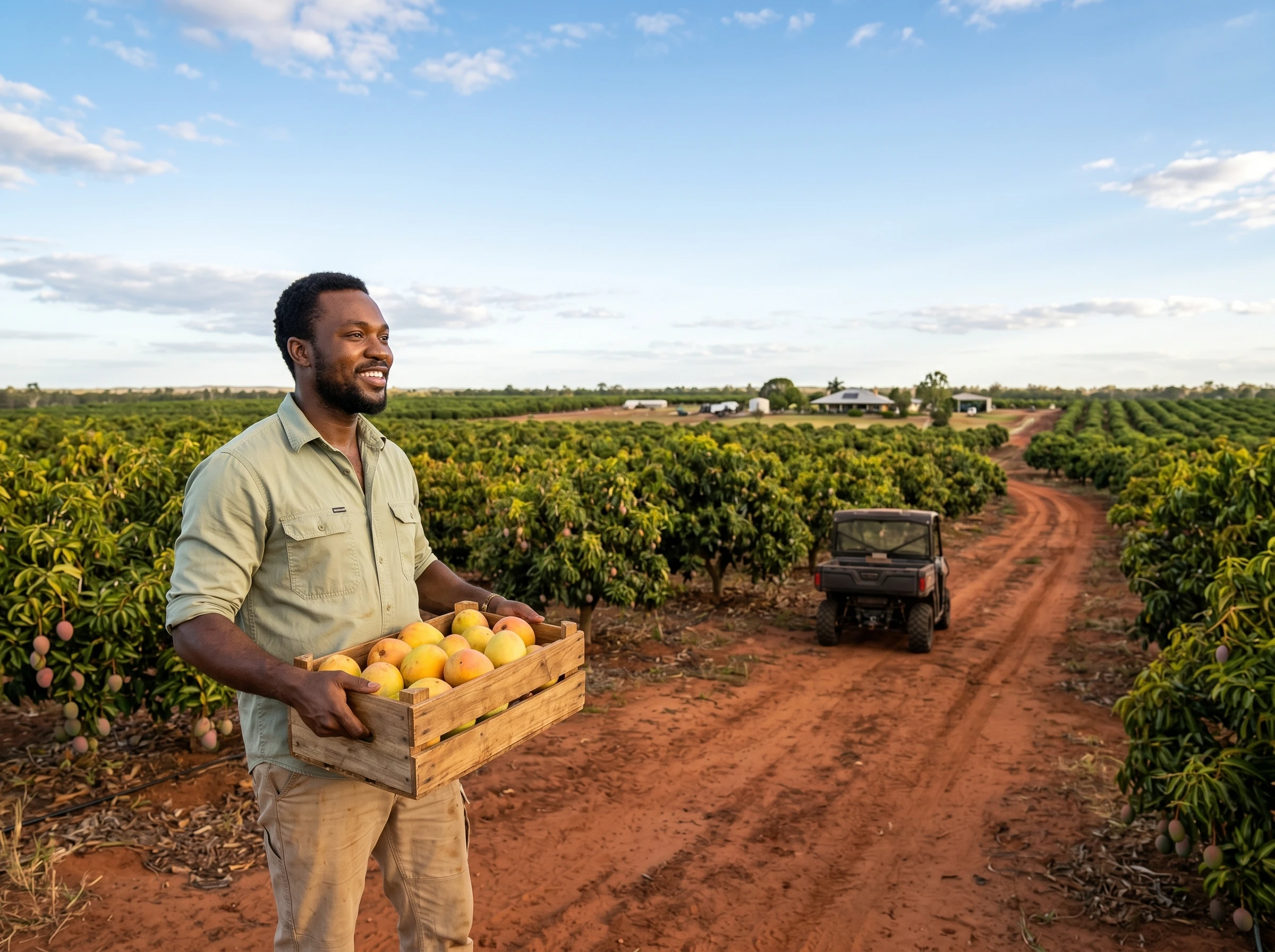
Australia does not just have some of the most beautiful landscapes in the world — it also has one of the most robust agricultural economies and a serious shortage of farm and seasonal workers. Right now, Australia is offering Nigerians a compelling deal: come work on our farms, earn AUD $55,000–$75,000 per year, and use that time to build a pathway toward Australian permanent residency.
If you are looking for a legitimate, proven route to living and working in Australia without needing a university degree, the agricultural and rural jobs sector may be your fastest entry point.
Overview of the Opportunity
Australia’s agriculture sector contributes over AUD $70 billion to the national economy annually. Farms, orchards, vineyards, livestock stations, and aquaculture operations across Queensland, Victoria, South Australia, Western Australia, and NSW face chronic worker shortages — and they are willing to sponsor the right people from abroad.
Under several visa streams — including the Seasonal Worker Programme (SWP), the Pacific Australia Labour Mobility (PALM) scheme, and the Employer-Sponsored Permanent Visa (subclass 187) — foreign workers can enter Australia legally, earn above-average wages, and in some cases settle permanently.
Why This Opportunity Matters
Agriculture and farm work in Australia is genuinely well-compensated. Australian farms are bound by strict labour laws, meaning you are protected from exploitation and guaranteed minimum wages. The national minimum wage in Australia is currently AUD $23.23 per hour, and farm work often pays AUD $26–$35 per hour including penalty rates for weekends and early mornings.
A farm worker averaging 45 hours per week earns approximately AUD $5,500–$6,500 per month before tax. At current exchange rates of roughly ₦1,000 per AUD, that is the equivalent of ₦5.5 million to ₦6.5 million per month — a life-changing figure by any Nigerian standard.
How the Program Works
The PALM scheme and SWP allow eligible Pacific and select African countries (Nigeria is increasingly considered through bilateral agreements and employer-sponsored routes) to send workers to Australia for seasonal agricultural roles. Beyond seasonal programs, direct employer sponsorship under the subclass 482 (Temporary Skill Shortage) and subclass 187 (Regional Sponsored Migration) visas offers longer-term and permanent pathways.
Under the subclass 187, an Australian regional employer can sponsor a foreign worker for permanent residency directly — bypassing the need for points-based selection. This is one of the most direct routes to Australian PR available outside of the skilled migration points system.
Key Employers and Sponsors
- Costa Group — Australia’s largest fresh produce company (fruits, vegetables, mushrooms)
- Select Harvests — almond and nut farming across Victoria and South Australia
- Australian Agricultural Company (AACo) — beef cattle across Queensland and NT
- SunRice — rice farming in New South Wales
- Moraitis Group — horticulture (tomatoes, capsicum, cucumber)
- Hundreds of family-run farms and cooperatives, particularly in Queensland (bananas, mangoes), Victoria (berries, apples), and South Australia (wine grapes)
Eligibility Requirements
- Valid Nigerian international passport
- Age 18–45 years (most seasonal programs prioritise this range)
- Physical fitness and ability to work outdoors in varying weather conditions
- Basic English communication skills
- Willingness to relocate to rural or regional areas
- No serious criminal record
- For employer-sponsored routes: relevant farm work experience is an advantage but not always mandatory at entry level
Required Documents
- Valid international passport
- Updated CV/resume highlighting any outdoor, physical, or agricultural experience
- Proof of English language ability (no formal test required for most seasonal roles)
- Police clearance certificate from Nigeria
- Medical examination from an Australian government-approved panel physician
- Passport-sized photographs
- Bank statements (for visa application)
- Letters of reference from previous employers (if available)
Step-by-Step Application Process
Step 1: Research the PALM scheme at palmscheme.gov.au and check the list of approved sending countries and registered employers.
Step 2: Search for employer-sponsored farm jobs in Australia on platforms like Seek.com.au, AgJobs Australia, or LinkedIn. Filter results by “visa sponsorship” or “regional sponsorship.”
Step 3: Apply directly to employers. Include any physical work, agriculture, construction, or outdoor experience — even from Nigeria — in your application.
Step 4: Attend a virtual or in-person interview. For PALM scheme positions, your employer coordinates with the Australian government directly.
Step 5: After a job offer, complete your medical examination in Nigeria (approved panel physicians are in Lagos and Abuja).
Step 6: Apply for your visa through the ImmiAccount portal at immi.homeaffairs.gov.au. Submit all required documents.
Step 7: Once your visa is approved (typically 4–10 weeks), book your flight, arrive in Australia, and begin work. For subclass 187 applicants, you receive permanent residency status on arrival.
Important Deadlines
Agricultural harvest seasons drive hiring timelines in Australia:
- Queensland (tropicals — mangoes, bananas): June–November
- Victoria and NSW (berries, stone fruit): October–April
- South Australia (wine grapes): February–April
- Year-round livestock and dairy: No seasonal restrictions
Apply 3–4 months before your desired start date to allow time for visa processing.
Types of Roles Available
- Fruit picker / harvest worker
- Tractor and machinery operator
- Livestock handler / stockman
- Packing shed worker
- Farm supervisor / crew leader
- Irrigation and crop maintenance worker
- Dairy and poultry farm hand
- Aquaculture / fish farm worker
💰 Salary and Financial Breakdown
| Role | Hourly Rate (AUD) | Monthly (AUD) | Monthly Naira Equivalent |
|---|---|---|---|
| Fruit Picker (entry) | $23–$27/hr | $3,990–$4,680 | ₦3,990,000–₦4,680,000 |
| Machine Operator | $28–$35/hr | $4,850–$6,060 | ₦4,850,000–₦6,060,000 |
| Farm Supervisor | $36–$45/hr | $6,240–$7,800 | ₦6,240,000–₦7,800,000 |
| Livestock Manager | $45–$58/hr | $7,800–$10,050 | ₦7,800,000–₦10,050,000 |
Annual earnings for most full-time farm workers fall in the AUD $55,000–$75,000 range. Supervisors and machinery operators frequently earn AUD $80,000–$90,000 annually.
Additionally, many farms offer:
- Free or subsidised on-site accommodation (saves AUD $800–$1,500/month)
- Meals included for live-in workers
- Transport to and from work sites provided by employer
Additional Benefits
- Medicare access (Australia’s universal healthcare system) for eligible visa holders
- Superannuation (retirement savings — employer contributes 11% of your salary)
- Paid public holidays
- Pathway to Australian permanent residency (subclass 187)
- Pathway to Australian citizenship after 4 years of PR
- Access to free English language programs in regional areas
- Community integration support for new arrivals
Common Mistakes to Avoid
- Targeting only Sydney and Melbourne — farm and agricultural jobs are in regional areas. If you insist on big cities, you will miss the visa sponsorship opportunities.
- Assuming all “visa sponsorship” ads are legitimate — check that the employer has a valid DAMA (Designated Area Migration Agreement) or approved sponsor status before proceeding.
- Not completing your medical early — panel physician appointments in Lagos can have a 2–3 week wait. Book early.
- Underestimating the physical demands — farm work in Australian heat is demanding. Be honest about your fitness level and prepare physically before arriving.
Conclusion
Australia’s farm and agriculture sector is one of the most overlooked pathways for Nigerians seeking legal, well-paid work abroad. With AUD $70,000 annual salaries, free housing in many cases, and a direct route to permanent residency under the regional sponsorship visa, this is an opportunity that deserves serious attention. Start your search today — regional Australia is hiring, and Nigerians are welcome.
→ Visit palmscheme.gov.au or search “farm jobs visa sponsorship Australia 2025” on Seek.com.au to explore current openings
Frequently Asked Questions
1. Do I need farm experience to apply for Australian agricultural jobs? Not for entry-level picking and packing roles. Experience is an advantage but employers are willing to train motivated workers. Physical fitness and reliability matter more.
2. Is Australian farm work safe and regulated? Yes. Australian agricultural workers are protected by the Fair Work Act. Employers cannot withhold wages, confiscate passports, or impose illegal deductions. Report any violations to the Fair Work Ombudsman.
3. How much does farm accommodation cost in Australia? Many regional farm employers provide free or subsidised on-site housing. When accommodation is charged, it is usually capped at a reasonable rate (typically AUD $100–$200/week) and deducted directly from pay.
4. Can I switch employers in Australia on a sponsored visa? For PALM scheme and seasonal visas, you are generally tied to the sponsoring employer. On a subclass 482 visa, you can transfer to a different sponsor as long as you remain in the same occupation.
5. What is the subclass 187 visa and how does it lead to permanent residency? The subclass 187 (Regional Sponsored Migration Scheme) allows Australian regional employers to sponsor overseas workers for permanent residency directly. Once approved, you arrive in Australia as a permanent resident — with no points test required.
Apply here:
- PALM Scheme official site: https://www.palmscheme.gov.au
- Seek Australia (farm jobs): https://www.seek.com.au/farm-jobs/in-All-Australia
- ImmiAccount (visa application portal): https://immi.homeaffairs.gov.au
- Subclass 187 visa info: https://immi.homeaffairs.gov.au/visas/getting-a-visa/visa-listing/employer-nomination-scheme-186
© 2025 — All blog posts written for informational purposes. Always verify program details directly with official government websites and licensed immigration advisors before applying.